Column | Linking youth to the jobs they need

Normally, the prospect of a summer job is an exciting one: a chance to earn some money towards the coming academic year, after obtaining a degree or being accepted to a training program.
This summer presented a sobering new reality for young job seekers – there were very few jobs available. Because of COVID-19, many typical places young people might look for work weren’t open or were barely operating. Across the country, young people have borne a disproportionate share of job losses associated with COVID-19.
Enter the Canada Summer Jobs (CSJ) program, an important, annual federal program with support from politicians of all stripes. CSJ provides employers with incentives to hire young people – in many cases to work in roles related to their chosen fields of study. The program provides career-related work experience in supervised professional settings offering entry-level positions in community service, non-profit and charitable organizations and small businesses.
Making a difference in the community
Each summer, I take time to visit organizations that employ CSJ students. This provides opportunities to hear from young workers, and to see directly how CSJ has made a difference for the employer and benefitted the community.
Given the COVID crisis, you might think finding employment for students would be difficult. In fact, we found significant demand – particularly from service organizations working hard to maintain essential programs while providing safe, meaningful work.
The demand was, in part, created by changes made to the way CSJ works – emphasizing additional flexibility and extending timeframes, allowing organizations to consider taking on employees as they re-open into the fall or on a part-time basis.
This year in North Vancouver, the program involved 79 employers and created 125 jobs. These included:
- The Edible Garden Project’s Loutet Farm. CSJ employee Haley helps run the twice-weekly produce markets. She’s been studying sustainable development and social enterprise in the Global Stewardship Program at Capilano University.
“I wouldn’t have a full-time position without this [CSJ] grant. I’m interested in food security and food systems and this is definitely relevant to my interests and field of study,” confirmed Haley.
- The physically-distanced commercial kitchen at St. Andrews United Church. Rebecca was hired through CSJ to manage communications and outreach, which includes meal distribution efforts and helps the church assure that people in the community know about the support programs it has to offer during this stressful time.
- Reckless Shipyards E-Bikes. Owner Tony Sun – worried that his new, green business would fold before it ever got off the ground because of the COVID-19 shutdown – called my office to access federal assistance programs. Through the Canadian Emergency Wage Subsidy, he ensured his workers remained connected while they planned their reopening. Tony also engaged a CSJ employee who studies business at Cap U, who is now involved in every aspect of the e-bike operation, from repairs to administration.
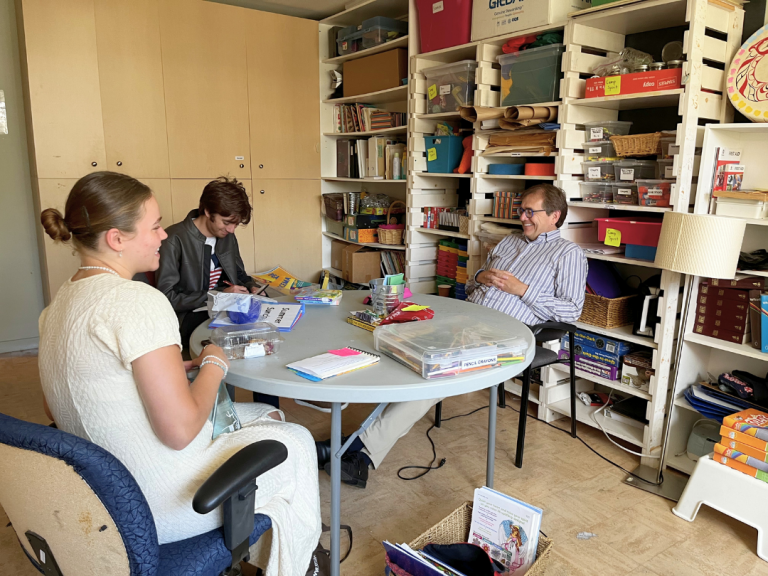
- North Shore Connexions Society, which fosters an environment of inclusion for people with intellectual disabilities. Four CSJ workers have been hired in various capacities; I met with three of them. Jodie, heading into her Master’s in Public Health, is working on safety protocols for workers and participants. Darius studies kinesiology; he leads workouts and physical activities for Connexions participants via Zoom. Aysa, who studies Commerce, is doing administrative work for the society.
- Other CSJ organizations receiving support have focused on scaling up activities or readying their future operations for reopening: Camp Artaban, which wasn’t able to open this season, has made use of CSJ students to do much needed expediting and administrative work, and the Seymour Salmonid Society hired a worker to assist with salmon enhancement activities.
Positive Impact
During difficult times, it is critical that we ensure learning and work opportunities for young people. Our experiences between the ages of 18 and 30 are formative years, so important to moving successfully through life. The Canada Summer Jobs Program, more flexible and responsive this year, is having a positive impact for many North Vancouver youth.